How to Know if Scalping Is for You: A Complete Guide for Quant Funded Traders
Introduction
Scalping is one of the most exciting yet demanding styles of intraday trading. While many traders dream of catching quick market moves and banking fast profits, the reality is that scalping requires a very specific mindset, strict discipline, and flawless execution. At Quant Funded, we see many traders attempt scalping during the evaluation process — some succeed brilliantly, others quickly discover that this fast-paced approach doesn’t align with their personality or risk tolerance.
This guide breaks down what scalping truly is, how it works, the psychological and technical requirements, and how to determine whether this style is a good fit for you, especially within a structured evaluation environment like Quant Funded.

What Is Scalping?
Scalping is an intraday trading method focused on capturing very small price movements — sometimes as little as 1–5 pips. Instead of holding trades for minutes or hours, scalpers often hold positions for seconds. Their goal is not to catch major swings but to build consistency through a series of small, controlled wins.
Core characteristics of scalping:
- High frequency of trades
- Extremely fast decision-making
- Tight stop-losses and small profit targets
- Dependence on low spreads and fast execution
- High focus and minimal emotional interference
In short: scalping is precision trading.
How Does Scalping Work in Practice?
A scalper aims to take advantage of micro-movements in price around key liquidity levels, momentum shifts, or small order flow imbalances. Because each trade aims for a small reward, entries must be extremely accurate, and losses must be cut instantly.
Common elements of successful scalping strategies:
- Micro support and resistance levels
- Momentum bursts following news or liquidity sweeps
- Order flow and tape-reading
- Break-and-retest patterns on micro-timeframes (e.g., 5s, 15s, 30s)
- Liquidity grabs and quick reversals
Scalping is not random clicking — it is a systematic approach based on structure, liquidity and volatility.
The Scalper’s Edge Inside the Quant Funded Evaluation
Within the Quant Funded Challenge, scalping can offer major benefits — but also unique risks.
Why scalping can be powerful during the evaluation:
- Multiple opportunities every session
- Quick feedback loops
- Ability to grow small gains into consistent progress
- Low exposure to unexpected macro events since trades are short-lived
Why scalping can be dangerous in an evaluation:
- Fast losses can break the Daily Loss Limit
- Overtrading leads to fatigue and mistakes
- Emotional impulse trades appear more often
- One bad oversized trade can ruin an entire phase
For this reason, only highly disciplined, technically prepared traders tend to succeed with scalping in a prop evaluation environment.
Core Requirements to Be a Successful Scalper
1. Psychological Discipline
Scalping compresses stress into seconds. A scalper must:
- Execute without hesitation
- Stay emotionally neutral after wins or losses
- Avoid revenge trading
- Reset mentally after every trade
- Remain laser-focused for long periods
If you struggle with emotions, impulses, or hesitation, scalping will expose it quickly.
2. Technical Infrastructure
Execution speed is the lifeblood of a scalper. Small delays create losses where profits should have been.
A proper scalping setup includes:
- Low spreads (preferably raw)
- Low-latency execution
- Reliable internet connection
- Zero platform interruption
- A clean chart and fast keybindings
Even a 200–300 millisecond delay can completely change the outcome of a scalp.
3. Strict Risk Management
Because take-profit levels are small, risk control must be absolute.
A scalper must:
- Keep stops tight and consistent
- Avoid oversized positions
- Never hold losses past invalidation
- Accept frequent small losses as part of the strategy
Within the Quant Funded rules, where discipline is measured, scalping works only if you respect your limits every single time.
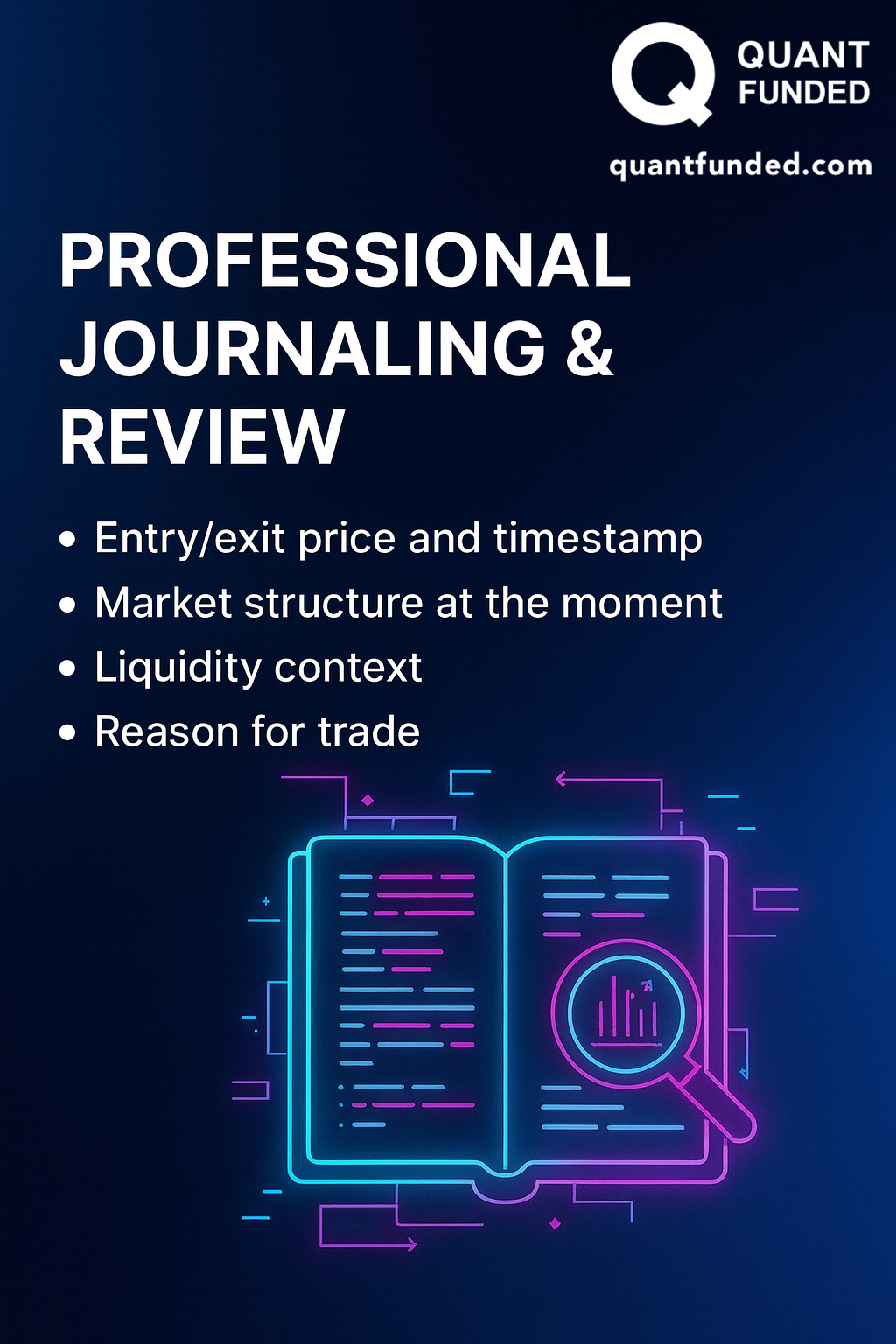
4. Professional Journaling & Review
Scalping is so fast that many errors go unnoticed unless reviewed later.
A scalping journal should track:
- Entry/exit price and timestamp
- Market structure at the moment
- Liquidity context
- Emotional state
- Reason for taking the trade
- Any rule break (even 1 second of hesitation)
Small improvements here lead to dramatic performance upgrades.
Advantages of Scalping for Quant Funded Traders
1. Many Daily Opportunities
Scalping gives traders multiple setups even on low-volatility days — perfect for building consistency.
2. Low Overnight Risk
Scalpers close trades quickly, avoiding macro news spikes and overnight holding risks.
3. Clear Mind After Trading
Once the session ends, the day is done. No analysis, no market watching.
4. Compounding Through Small Wins
Even 0.2%–0.5% per session can add up quickly across a month.
5. Works Across All Market Conditions
Range-bound, choppy markets are often ideal for scalpers.

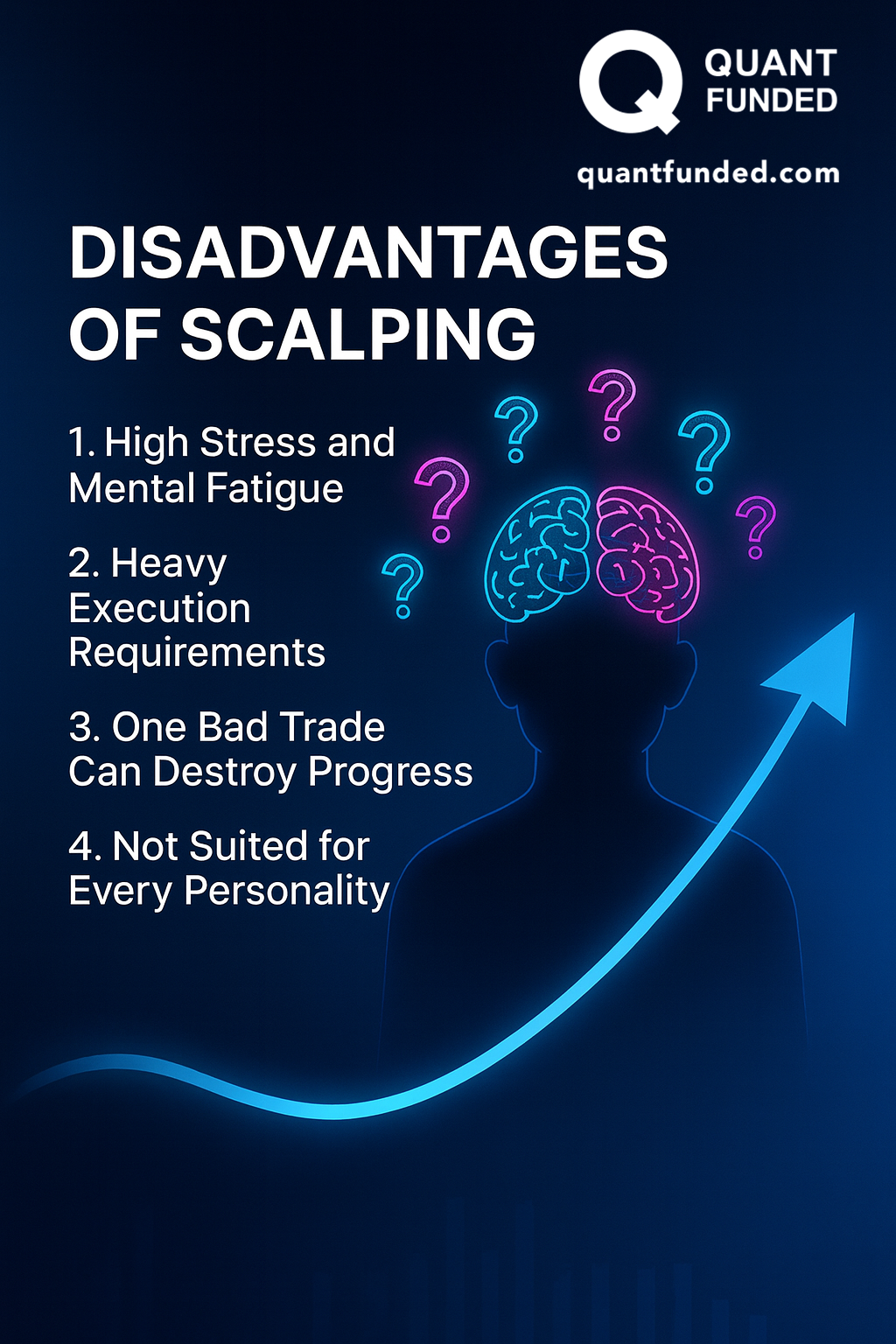
Disadvantages of Scalping
1. High Stress and Mental Fatigue
Scalping requires sustained focus — mistakes appear when concentration dips.
2. Heavy Execution Requirements
Poor infrastructure kills scalpers’ performance.
3. One Bad Trade Can Destroy Progress
Because profits are small, a single emotional mistake can break the daily limit.
4. High Transaction Costs
Commissions and spreads add up due to high trade frequency.
5. Not Suited for Every Personality
If you dislike speed, pressure, or multitasking, scalping will not be sustainable.
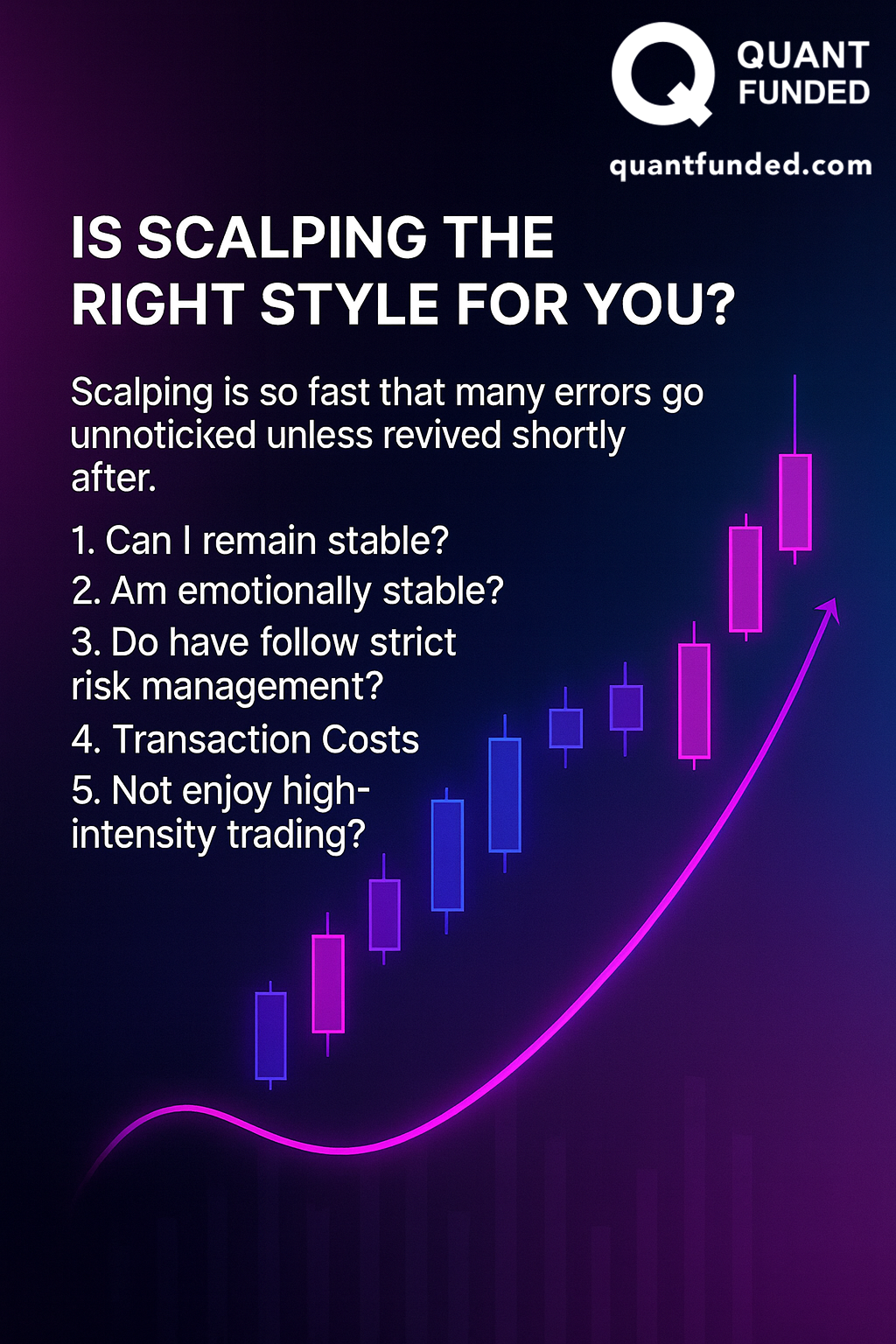
Is Scalping the Right Style for You?
Ask yourself these questions:
1. Can I make fast decisions without hesitating or doubting myself?
If not, scalping may create frustration.
2. Am I emotionally stable after fast wins and losses?
Scalpers must stay neutral at all times.
3. Do I have the technical setup to support fast execution?
If your internet or platform lags, avoid scalping.
4. Can I follow strict risk management without breaking rules?
This determines success more than any strategy.
5. Do I enjoy high-intensity trading?
Scalping must fit your temperament — not force it.
If you answered YES to most of these, scalping might be the ideal path for your Quant Funded journey.
Conclusion: Scalping Rewards Discipline and Punishes Emotion
Scalping is a powerful trading style that can create consistent growth — but only for traders who have the psychological, technical, and risk-management foundation to execute it properly.
At Quant Funded, we encourage traders to choose a trading style that aligns with their personality. Scalping can work beautifully during the challenge and on a funded account, but only when approached with precision and discipline.
If you thrive in fast environments, enjoy real-time analysis, and maintain emotional control, scalping may be the style that takes you to funded status and beyond.